When operating above 10,000 feet in sub-zero winter conditions, outdoor equipment is not merely a convenience—it is a critical life-support system. A failure in liquid fuel vaporization, fabric tear resistance under 60-knot winds, or satellite distress connectivity can transform a routine high-ridge ascent into a life-threatening crisis. This report outlines our lab benchmarks and field testing protocol across three core gear classes.
1. Four-Season Geodesic Tents & High-Altitude Shelters
Standard three-season backpacking tents rely on flexible fiberglass or low-gauge aluminum poles that buckle under heavy snow accumulations. True alpine shelters employ a multi-intersection geodesic pole geometry.
- DAC Featherlite NSL Aluminum Poles: Engineered with variable diameter junctions to distribute wind shear evenly across all apex hubs rather than localizing stress.
- Ripstop Sil/Sil High-Tenacity Flysheets: Silicone-coated on both interior and exterior faces to maintain tensile elasticity down to -40°F without the delamination and freezing fragility associated with polyurethane (PU) coatings.
- Perimeter Snow Valences: Heavy-duty ground skirts buried under packed snow prevent wind from penetrating beneath the tent floor and freezing the occupants.
Combustion Dynamics: Liquid White Gas vs. Inverted Isobutane
Canister isobutane drops vapor pressure dramatically below 20°F (-7°C), resulting in weak flames or complete burner failure. For deep winter mountaineering, pressurized liquid white gas stoves with integrated brass generator loops provide sustained 10,500 BTU heat output regardless of ambient temperature.
2. Satellite Telemetry & Avalanche Rescue Beacon Arrays
In steep alpine valleys where cellular networks are non-existent, emergency communication relies on 100% global coverage low-earth orbit (LEO) constellations such as Iridium and direct 406 MHz COSPAS-SARSAT beacons.
- Three-Antenna Digital Transceivers: Utilizing three orthogonal antenna coils (X, Y, Z) eliminates null points, calculating exact distance and burial orientation within a 70-meter spherical search radius.
- Supercapacitor Inflation Airbags: Unlike compressed gas cylinders that require hazardous materials clearance for air travel and can leak pressure in extreme cold, supercapacitor systems deploy high-CFM centrifugal fans within 3 seconds and allow multiple test deployments in camp.
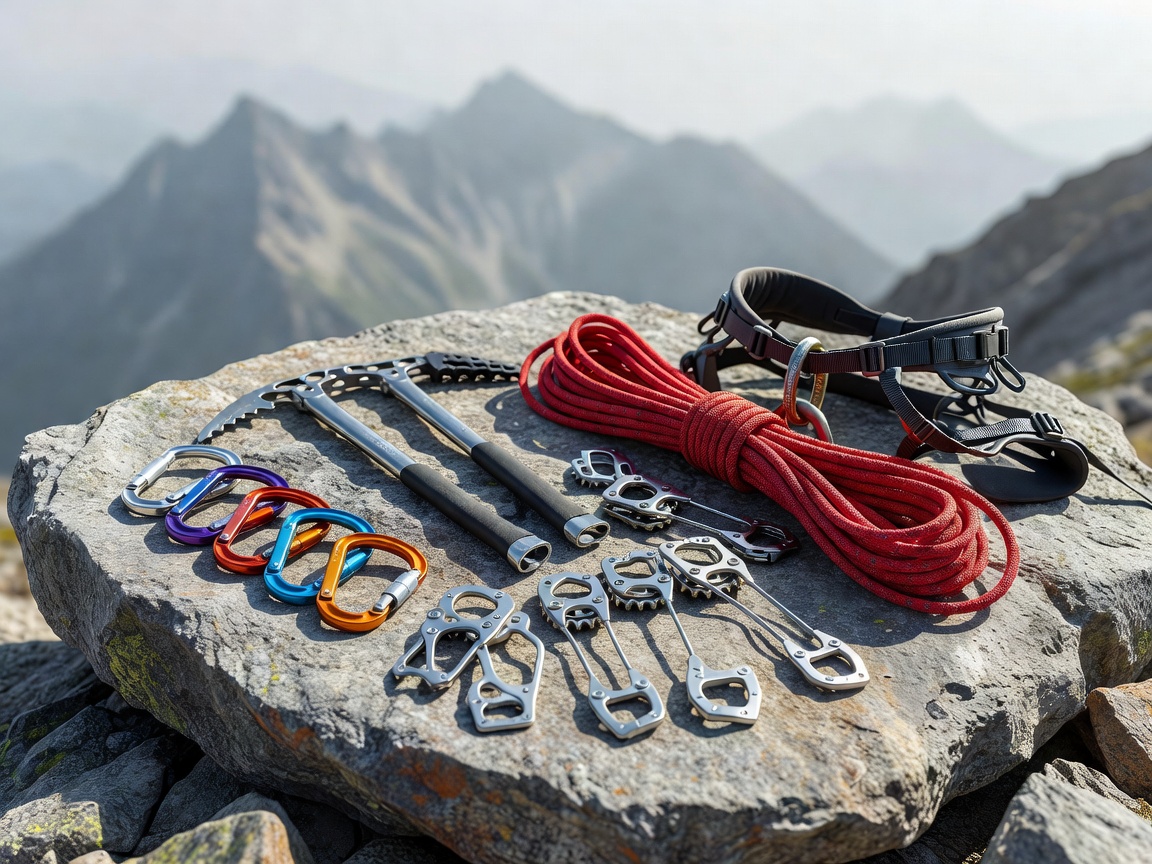
3. Technical Crampons, Ice Axes & Mountaineering Hardware
Chromoly steel remains the gold standard for high-wear front points and technical ice axes. We evaluate hardness ratings on the Rockwell C Scale (HRC 48-52) to ensure sharpness retention against granite scree while preventing brittle fractures under shock-load swings into hard glacial blue ice.